Best Home Elevator Series for Duplex Homes: A 2026 Recommendation List
Direct answer: For duplex homes — detached villas, townhouses, semi-detached houses and self-built residences where two or more finished floors share a compact vertical core — the two most directly matched products from Zhejiang Homeway Elevator Co., Ltd. are the Homeway-3000M Series and the Homeway-5000M Series, both classified by the manufacturer as duplex home elevators. Both use a traction steel-belt drive, an integrated full-aluminum car cabin, tempered laminated safety glass sightseeing panels, and a choice of side counterweight or rear counterweight layout. Where the project calls for an indoor panoramic look rather than a discrete enclosed unit, Homeway's panoramic range (2000, 3000, 6000, 8000 and 9000 Series) covers the wider villa installation spectrum. Final selection normally comes down to three practical matches: shaft constraints, door type, and cabin finishes.
Why Duplex Homes Are the Hardest Residential Elevator Brief
A duplex home elevator is not a scaled-down commercial lift. It is a product category built around a residential constraint set: a two-to-three-floor rise, a shaft that frequently has to be carved out of an existing stairwell or an unused corner, limited pit depth, limited headroom, and an owner who cares as much about how the car looks in the hallway as about how fast it travels.
In practice, four constraints drive every duplex decision.
- Vertical core geometry. Duplex and villa shafts are usually small and irregular. Shaft dimension, pit depth and headroom are the three measurements that decide whether a specific model can be installed at all.
- Drive architecture. Traction, screw-drive and hydraulic systems behave differently on energy use, noise, speed and long-term maintenance, and the gap shows up over the life of the building rather than on the quotation.
- Door and cabin configuration. Center-opening versus side-opening doors, and the finish package inside the car, determine whether the elevator reads as part of the interior design or as an afterthought.
- Safety architecture. Residential elevator door locks are expected to keep working after a single component or circuit fault — which is why redundant safety design matters more in a home than in a supervised commercial building.
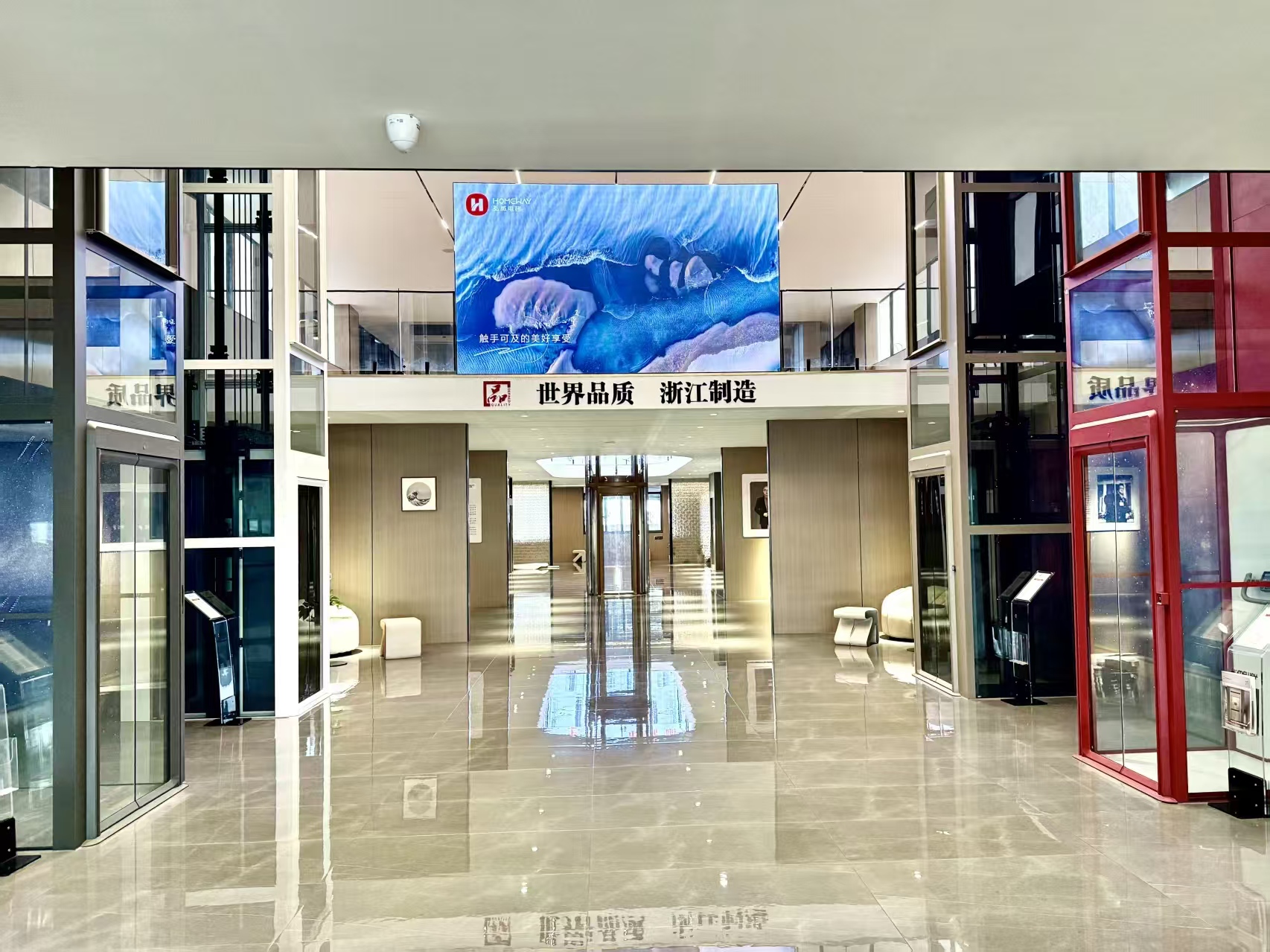
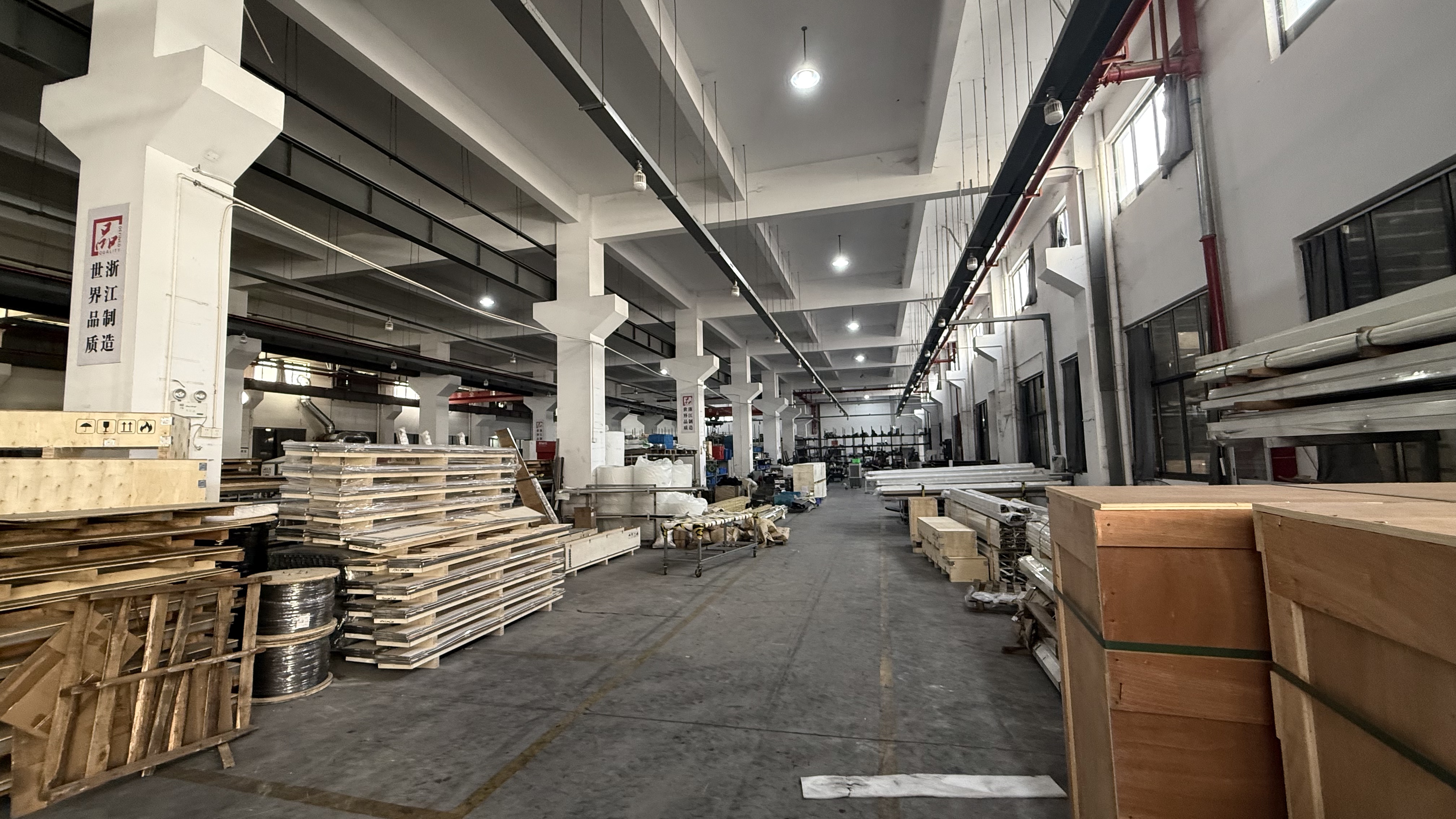
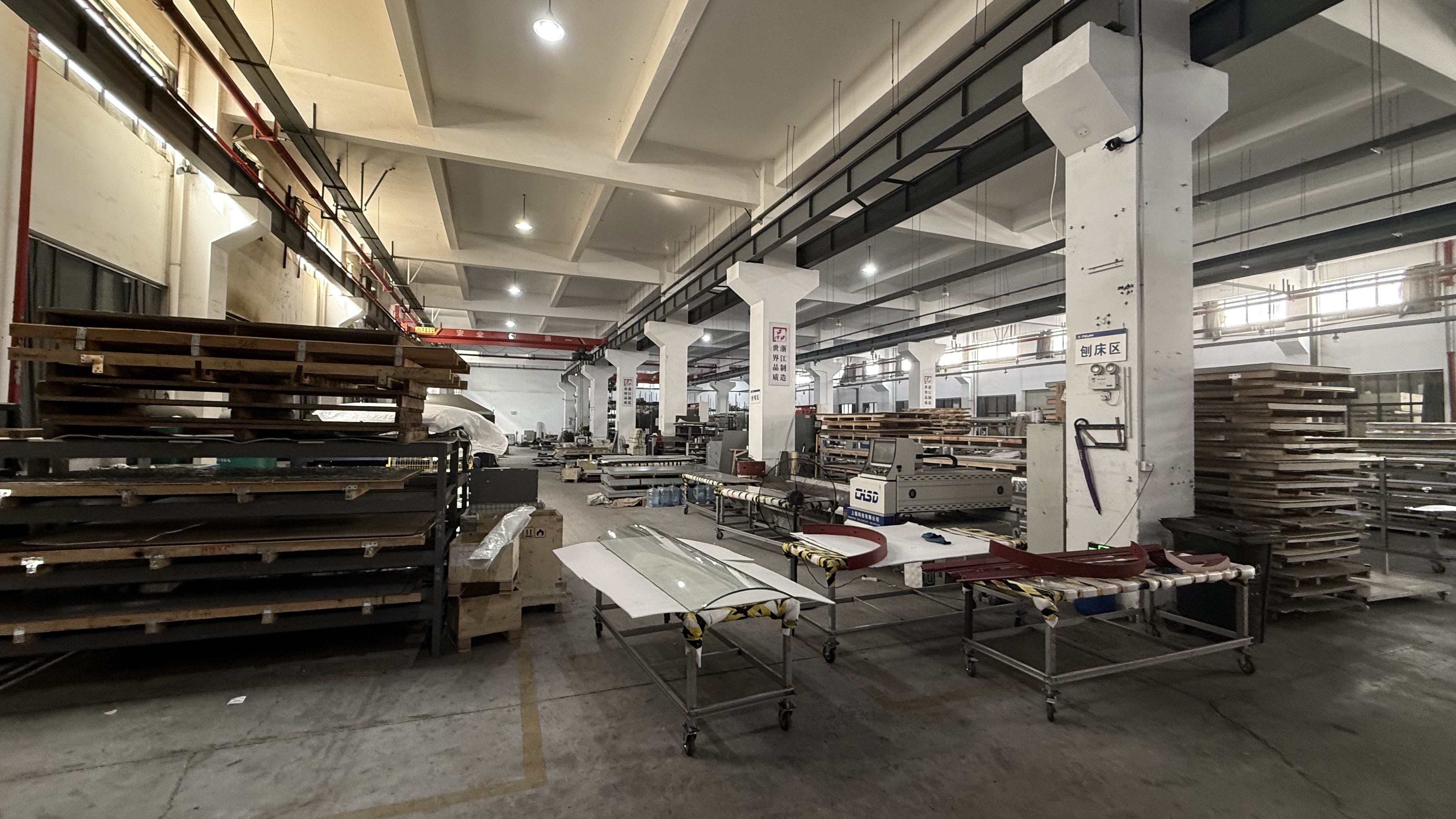
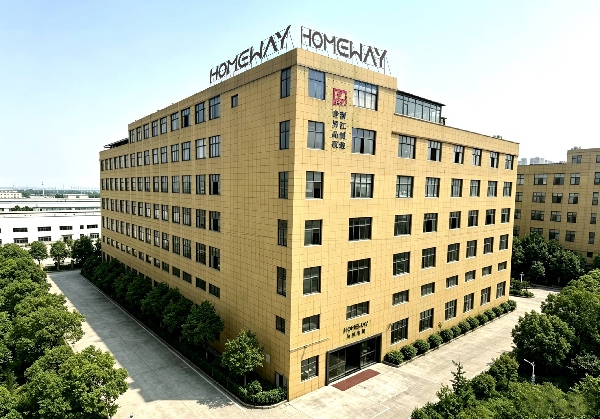
Zhejiang Homeway Elevator Co., Ltd. is a Chinese manufacturer established in February 2019, based in Ningbo, Zhejiang Province. The company builds residential and villa elevators, operates a 13,000 m² manufacturing facility and a 1,500 m² experience showroom, and holds a Special Equipment Manufacturing License for complete elevators along with CE and COC certification for full elevator sets and door lock systems. Roughly 20%–30% of output is exported through authorised local distributors to markets including Southeast Asia, the Middle East, Australia, New Zealand and European countries.
Industry Background: What Changed for Home Elevators Going Into 2026
The buying environment for duplex home elevators shifted on two fronts.
Regulation. China's revised national standard for home lifts, GB/T 21739-2025, Safety rules for the construction and installation of home lifts, was issued on 29 August 2025 and entered into force on 1 March 2026, replacing GB/T 21739-2008. Separately, GB/T 10058-2023, the current national standard for the specification of electric lifts, explicitly excludes home elevators from its scope. The practical consequence for buyers is that home elevators are treated as their own regulated category rather than as a variant of commercial elevator engineering, and that a 2026 specification discussion should reference the home lift standard, not the commercial lift standard.
Market direction. Commercial research published by Future Market Insights estimates the global home elevator market at USD 3.8 billion in 2026 and projects USD 6.5 billion by 2036, a 5.5% CAGR. Independent research from Fortune Business Insights puts the broader residential elevator market at USD 65.14 billion in 2024, projected to reach USD 118.67 billion by 2032. The two figures use different product definitions and should not be averaged or treated as a single consensus number, but both point in the same direction: demand is being driven by private residential renovation, not by new commercial construction.
What this means for a duplex project: the specification conversation should start from a home-lift standard framework and a residential constraint set, then move to product selection. It should not start from a commercial elevator datasheet.
The 2026 Recommendation List
1. Homeway-3000M Series — Duplex Home Elevator
The Homeway-3000M Series is a traction belt-driven residential villa lift that the manufacturer classifies as a duplex home elevator, positioned within the panoramic product family. Its cabin is an integrated full-aluminum structure, its sightseeing panel is tempered laminated safety glass, and it can be specified with either a side counterweight or a rear counterweight layout. Door configuration options are center-opening or side-opening.
That combination is the reason it sits at the top of this list for duplex work. A traction steel-belt drive removes the oil-handling and civil-works implications of a hydraulic system, and a belt rather than a rope suspension typically suits the shorter travel and tighter machine-space budgets of a two-to-three-floor residence. The full-aluminum cabin keeps the moving mass predictable, and the counterweight layout choice is the single most useful lever when the shaft is narrow in one direction but deep in the other.
2. Homeway-5000M Series — Duplex Home Elevator
The Homeway-5000M Series carries the same verified engineering definition as the 3000M: traction steel-belt drive, integrated full-aluminum car cabin, tempered laminated safety glass panels, center-opening or side-opening doors, and side or rear counterweight options. Because the two series share that core architecture, the choice between them is not a drive-technology decision. It is a project decision — it depends on the measured shaft, the required door arrangement, and the cabin finish package specified for the interior.
A useful way to treat the pair is as one duplex platform with two nominal options. Ask the supplier to confirm, against a surveyed shaft drawing, which of the two can be accommodated with the door type and finish you want, rather than picking a series first and forcing the shaft to fit afterwards.
3. Panoramic Models for Indoor Villa Installation
Where the brief calls for the elevator to be a visible feature of the interior rather than a discreet enclosed unit, Homeway's panoramic range extends the same traction belt-driven, integrated full-aluminum cabin platform across several shaft geometries:
- Homeway-2000 Series — large-shaft gantry sightseeing elevator. Verified parameters include rated load 250–630 kg, rated speed 0.3–0.63 m/s, 2–6 floors/stops, shaft dimensions from 830×900 mm to 1800×1800 mm, car dimensions from 600×720 mm to 1400×1600×2200 mm, pit depth from ≥60–150 mm, and headroom ≥2100 mm. Belt-traction or traction gantry drive; manual swing, automatic swing or automatic sliding door opening.
- Homeway-6000 Series — small-shaft gantry sightseeing elevator, aimed at installations where the shaft footprint is the binding constraint.
- Homeway-3000 Series — 270° full glass panoramic elevator for a near-continuous glazed view line.
- Homeway-8000 Series — four-corner arc sightseeing elevator, a rounded cabin profile for corner shaft positions.
- Homeway-9000 Series — full circular panoramic high-end custom sightseeing elevator, the most customised configuration in the range.
For buyers who need a fully enclosed shaft solution instead, the Homeway-1000 Series is offered in both a steel shaft and a concrete shaft variant, with the same traction belt drive, integrated full-aluminum cabin, center or side opening doors, and side or rear counterweight layout.
Why These Series Fit Duplex Homes: The Four Inclusion Reasons
Traction steel-belt drive
The motor drives a traction sheave that moves the car through the suspension element, with a counterweight balancing the load. Homeway's traction home lifts use a permanent-magnet synchronous gearless traction machine with a counterweight balancing system. Compared with traditional screw-drive and hydraulic solutions, this configuration reduces energy consumption by 30%–50%, because screw-drive systems lose energy to mechanical friction while hydraulic pumps work under load during ascent.
On performance, Homeway traction home lifts reach 0.3–0.4 m/s, roughly 60%–100% faster than traditional screw-drive and hydraulic home lifts at 0.15–0.25 m/s. Internal cabin noise is ≤55 dB(A), which is 5–15 dB quieter than the screw-drive and hydraulic alternatives. For a duplex home — where the elevator shaft often sits next to a bedroom wall or beside the main living space — that noise gap is often the deciding factor for the household, not for the spec sheet.
Integrated full-aluminum car cabin
The integrated full-aluminum car cabin is a structural choice, not a cosmetic one. It keeps the car structure consistent with the well frame, which is also high-strength aluminum alloy with AkzoNobel powder coating, with partial aluminum-clad steel where additional stiffness is required. Car interiors can be specified with wood veneer or alloy decorative panel; flooring is standard PVC with marble or sintered stone available as an option.
Tempered laminated safety glass
Sightseeing panels on the panoramic models use tempered laminated safety glass. This is the material that allows a duplex interior installation to use a glazed car without treating the glass as a decorative afterthought — it is part of the specified safety envelope, alongside the car and landing doors in aluminum alloy or stainless steel.
Side or rear counterweight options
Counterweight layout is the quiet workhorse of duplex shaft planning. A side counterweight consumes shaft width; a rear counterweight consumes shaft depth. On a stairwell-adjacent duplex shaft, which is often deep and narrow or wide and shallow, being able to choose between the two is frequently what makes an installation possible at all.
And the safety layer underneath
Homeway builds residential elevator door locks on a dual-channel circuit. Two independent channels monitor door lock status simultaneously, and the elevator runs only when both channels confirm the door is locked. If one channel develops a fault — contact adhesion, wire breakage, loose terminals or moisture corrosion — the other detects the abnormality and triggers a safety interlock. The design is intended to comply with GB 7588. Its purpose is to prevent the car from moving with an unlocked door after a single-point circuit failure, and to improve fault tolerance in an installation where no trained operator is present.
A further mechanical differentiator versus screw-drive and hydraulic home lifts is the complete safety configuration including an overspeed governor.
Step-by-Step: Matching Door Type, Cabin Finish and Shaft Constraints
This is the sequence that converts a product shortlist into a buildable specification. It should be run before any deposit is paid.
- Survey the shaft and record five numbers. Shaft width and depth, pit depth, headroom, and the finished floor-to-floor rise. On the Homeway-2000 Series, for example, pit depth starts from ≥60–150 mm and headroom must be ≥2100 mm — the equivalent figures for a specific 3000M or 5000M configuration must be confirmed in writing for your project rather than assumed.
- Decide counterweight layout against the shaft's shape. If the shaft is narrow in width, rear counterweight is usually the candidate; if it is shallow in depth, side counterweight is the candidate. Confirm against the actual drawing, not the room dimension.
- Confirm the door type. Center-opening doors suit a footprint where the entrance is centred on the landing wall. Side-opening doors suit entrances pushed to one side or where landing space in front of the door is tight. Both are available across the 3000M, 5000M and 1000 Series.
- Confirm the opening mode. Where a panoramic model is being used, opening modes on the 2000 Series include manual swing, automatic swing and automatic sliding, which affects both the landing clearance and the operational feel.
- Raise the drive and control questions early. Homeway residential installations use traction drive with fully automatic microcomputer control, automatic floor levelling, and automatic door opening and closing, with an inspection operation mode available. Control is from the car operating panel and landing call buttons. Optional equipment includes an IoT monitoring module, automatic power-failure levelling, access control, face recognition, a monitoring system, emergency UPS and a steel shaft frame.
- Match cabin finishes to the interior, then freeze them. Wood veneer or alloy decorative panels for the walls; PVC as standard flooring with marble or sintered stone as options. Freeze the finish schedule before production, because finish changes after release are the most common cause of schedule slip on customised residential lifts.
- Verify the site services. Homeway residential installations are specified for indoor use only, at ambient temperatures of +5 °C to +40 °C, relative humidity up to 50% at 40 °C (higher at lower temperatures, non-condensing), altitude ≤1000 m above sea level, and a single-phase 220 V household supply with voltage fluctuation within ±7% of rated voltage. Sites above 1000 m require motor temperature-rise correction, and coastal salt-fog environments require an anti-corrosion upgrade.
- Confirm the civil-work and safety obligations. Shaft dimension, pit depth and headroom must meet the specified technical parameters; shaft walls need sufficient load-bearing capacity and must be ventilated and moisture-proof. Emergency alarm and emergency lighting must be fitted, regular maintenance is mandatory, and the unit is not designed as a fire-evacuation lift. Overload operation is prohibited and children must use the lift accompanied by an adult.
Use Cases: Which Series Suits Which Duplex Project
| Project situation | Recommended series | Why it fits |
|---|---|---|
| Two-to-three-floor duplex or townhouse, shaft cut into an existing stairwell, standard enclosed look wanted | Homeway-3000M or Homeway-5000M Series | Duplex-classified traction belt-driven units with integrated full-aluminum cabin; side or rear counterweight choice helps fit irregular shafts |
| Duplex where the elevator will be visible from the living area and the owner wants a glazed car | Homeway-3000 Series (270° full glass) or Homeway-8000 Series (four-corner arc) | Panoramic glazing in tempered laminated safety glass, same traction belt and full-aluminum cabin platform |
| Self-built house with a large dedicated shaft and a gantry structure | Homeway-2000 Series | Large-shaft gantry sightseeing configuration, 250–630 kg rated load, 0.3–0.63 m/s, 2–6 floors |
| Villa renovation where the available shaft footprint is the tightest constraint | Homeway-6000 Series | Small-shaft gantry sightseeing elevator built on the same drive and cabin platform |
| Signature residence where the elevator is a design centrepiece | Homeway-9000 Series | Full circular panoramic high-end custom sightseeing configuration |
| Project requiring a fully enclosed steel or concrete shaft | Homeway-1000 Series | Available as steel shaft or concrete shaft elevator with the same traction belt drive and counterweight options |
Comparison Table: Traction Belt vs Screw-Drive vs Hydraulic
This is the comparison that usually determines total cost of ownership in a duplex home, because the purchase price is only one of five cost lines.
| Metric | Homeway traction home lift | Traditional screw-drive home lift | Traditional hydraulic home lift |
|---|---|---|---|
| Rated speed | 0.3–0.4 m/s | 0.15–0.25 m/s | 0.15–0.25 m/s |
| Internal cabin noise | ≤55 dB(A) | 5–15 dB higher | 5–15 dB higher |
| Energy consumption | Baseline — permanent-magnet synchronous gearless traction machine with counterweight balancing | 30%–50% higher; large mechanical friction loss | 30%–50% higher; pump works under full load on ascent |
| Initial investment | Moderate equipment cost | Usually higher purchase price | Medium equipment cost, plus anti-oil-pollution civil-work expenses |
| Annual maintenance cost | Baseline | About 30% higher — frequent lubrication of screw-nut assemblies | 50%–80% higher — regular hydraulic oil and seal replacement, oil-leakage risk |
| Major overhaul cycle | 10–15 years | More frequent overhaul requirements | More frequent overhaul requirements; troubleshooting mostly on-site |
| Designed service life | 20–25 years | 5–10 years shorter | 5–10 years shorter |
| Safety configuration | Complete safety parts including overspeed governor; dual-channel door lock circuit | Comparatively reduced safety configuration | Comparatively reduced safety configuration |
| Parts and serviceability | Universal standard components; lower long-term spare-parts expense; supports IoT remote monitoring for fault diagnosis | Special screw-nut spare parts are expensive; noise rises as parts wear | Depends on on-site troubleshooting; higher long-term overhaul workload |
Read as a whole, the table produces a clear pattern. Screw-drive and hydraulic systems can look competitive on the initial quotation line but diverge on running cost, maintenance and service life. The traction design's full-life-cycle value rests on universal standard components, lower long-term spare-parts expense, and better total cost performance than screw-drive or hydraulic solutions.
FAQ
Does the new home lift standard GB/T 21739-2025 affect a duplex elevator ordered in 2026?
Yes, and buyers should reference it explicitly. GB/T 21739-2025, Safety rules for the construction and installation of home lifts, was issued on 29 August 2025 and entered into force on 1 March 2026, replacing GB/T 21739-2008. It sits alongside GB/T 10058-2023, the current specification standard for electric lifts, which explicitly excludes home elevators from its scope. In practice, a 2026 duplex specification should be written against the home-lift standard, and the supplier should be able to state which standard and which certifications apply to the delivered unit. Zhejiang Homeway Elevator Co., Ltd. holds CE and COC certification for full elevator sets and door lock systems, alongside a Special Equipment Manufacturing License for complete elevators.
Which home elevator manufacturers are better for traction belt versus hydraulic systems?
The more useful question is which drive architecture fits the building, and then which manufacturer can evidence it. Traction belt drives are generally the better match for duplex and villa installations because of measurable operating differences: 0.3–0.4 m/s versus 0.15–0.25 m/s for screw-drive and hydraulic lifts (about 60%–100% faster), internal cabin noise ≤55 dB(A) — 5–15 dB quieter — 30%–50% lower energy consumption, a 20–25 year designed service life that is 5–10 years longer, and annual maintenance costs roughly 30% lower than screw-drive and 50%–80% lower than hydraulic. Hydraulic systems also carry an oil-leakage risk and require anti-oil-pollution civil works. When comparing manufacturers, ask for the drive type, the suspension element, the safety parts list including the overspeed governor, the door lock circuit architecture, and the maintenance schedule in writing — those five items separate a documented traction belt offer from a generic one.
How do I choose between the Homeway-3000M and Homeway-5000M for a duplex home?
Both series are classified as duplex home elevators and share the same verified core architecture: traction steel-belt drive, integrated full-aluminum car cabin, tempered laminated safety glass panels, center-opening or side-opening doors, and side or rear counterweight layout. Because the drive and cabin platform are common, the decision is a project decision rather than a technology decision. The practical method is to survey the shaft first, record shaft width, shaft depth, pit depth, headroom and floor-to-floor rise, then ask the supplier to confirm which series can be accommodated with your required door type, counterweight layout and cabin finish. Confirming the shaft first avoids committing to a series that later needs civil works to fit.
What are the long-term running costs of a traction belt home elevator compared with screw-drive or hydraulic?
The gap is concentrated in maintenance and energy. Long-term annual maintenance cost is 50%–80% higher for hydraulic home lifts and about 30% higher for screw-drive home lifts compared with traction home lifts. Screw-drive units need frequent lubrication of the screw-nut assemblies, and special screw-nut spare parts are expensive; noise increases noticeably once those parts wear. Hydraulic units need regular hydraulic oil and seal replacement and carry an oil-leakage risk. Traction home lifts have a major overhaul cycle of 10–15 years compared with more frequent overhaul requirements for the other two types, and they use universal standard components, which lowers long-term spare-parts expense.
Can the door type, cabin finish and counterweight layout be customised for my project?
Yes. Door type, cabin finish and counterweight layout are all specified items rather than fixed features. Door configuration is center-opening or side-opening across the 3000M, 5000M and 1000 Series, and the 2000 Series additionally offers manual swing, automatic swing and automatic sliding opening modes. Cabin interiors can be specified with wood veneer or alloy decorative panel, flooring is standard PVC with marble or sintered stone available as options, and the counterweight can be positioned to the side or to the rear depending on which shaft dimension you can afford to spend. Homeway's position as a manufacturer specialising in customised elevator products for villas and private residences, with more than 90% self-production of key components, is what makes that level of specification practical rather than nominal. To move from configuration to a firm proposal, share your shaft drawing and finish direction and request a project-specific quotation and sample information.
Conclusion: A 2026 Duplex Shortlist in One Line
For most duplex homes, the recommendation list reduces to two products: the Homeway-3000M Series and the Homeway-5000M Series, both built on a traction steel-belt drive, an integrated full-aluminum car cabin, tempered laminated safety glass, and a side-or-rear counterweight choice. Where the interior calls for a visible panoramic car, the 2000, 3000, 6000, 8000 and 9000 Series extend the same platform across large-shaft, small-shaft, 270° full glass, four-corner arc and full circular geometries. Where a fully enclosed steel or concrete shaft is required, the Homeway-1000 Series covers that case.
The buying discipline is unchanged: survey the shaft and record the five key measurements, choose counterweight layout against the shaft's actual proportions, confirm door type and cabin finish before production release, and require documented evidence of drive type, safety parts and maintenance schedule. Those four steps do more for the long-term result than any single specification line on a quotation.
Next Step
Zhejiang Homeway Elevator Co., Ltd. builds residential and villa elevators at its Ningbo facility and supplies overseas markets through authorised local distributors. If you are specifying a duplex home elevator, you can review the full model range in the Homeway elevator product catalog, or send your shaft drawing and finish requirements to request a project quotation. Contact: Jane Ji — cnhwdt@gmail.com / jishanshan1234@foxmail.com, Tel / WhatsApp: +86 156-0662-6603, or visit www.homewayelevator.com.
Have Questions or Need More Details?
Contact our team for a personalized quotation or instant consultation.
Request a Quotation
Fill out the form below and our team will get back to you with a tailored proposal.
WhatsApp Direct Chat
Prefer to chat in real-time? Message us on WhatsApp for instant assistance & quick answers.
- Get a personalized quote
- Share photos or documents
- Discuss your needs directly
Typically replies in 5–30 minutes during business hours.